Process1 min read
Is paper made from cow dung clean?
When people hear that our paper is made from cow dung, the next question is almost always the same: is it clean? Does it smell? It is a fair question, so here is the honest answer.
What actually ends up in the paper
A cow eats grass. What comes out, once it has dried in the sun, is largely undigested plant fibre: cellulose. Cellulose is exactly what paper is made of; trees are just the usual source. We are after that fibre and nothing else.
Dried, cleaned, sterilised
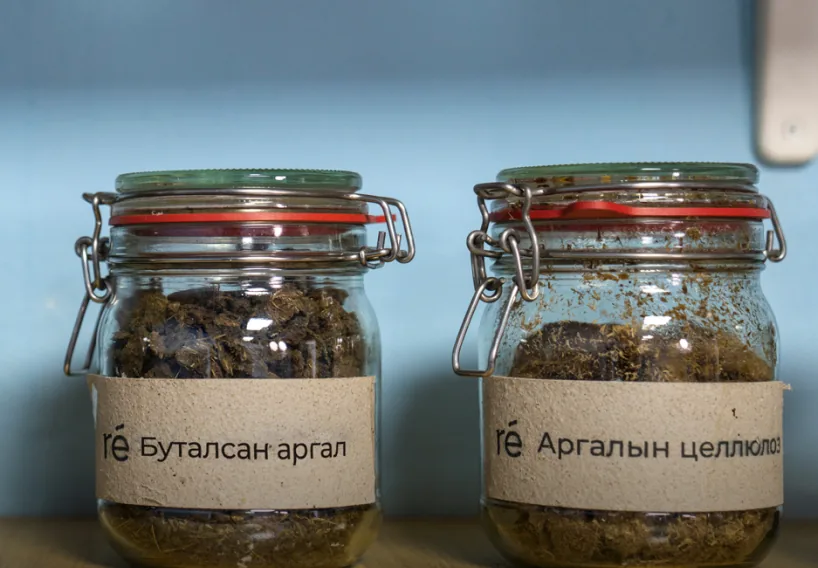
Argal reaches us already sun-dried. In our lab it is ground, then cleaned and sterilised, and the cellulose fibre is extracted. Everything that is not fibre stays behind.
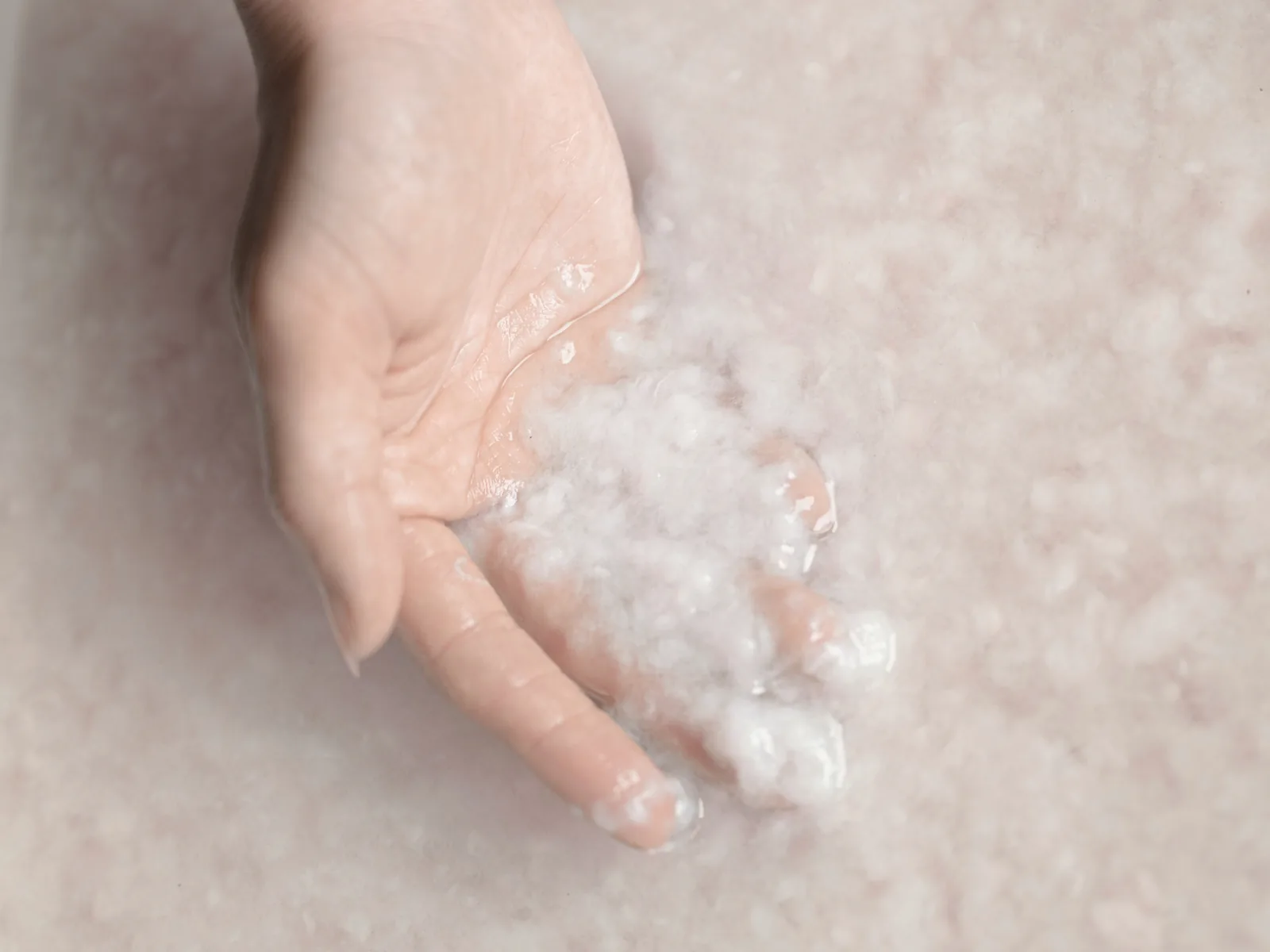
“What comes out of the lab looks like cotton wool or marshmallow: soft, light and only faintly brown.”
Does it smell?
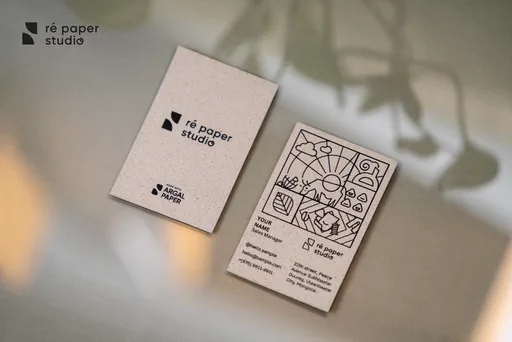
No. The raw material is dried and cleaned before it is pulped, and the finished paper has no smell. Hold one of our business cards to your nose and you will smell paper.
Why the colour stays
That faint brown carries through to the finished sheet, which dries to a warm grey flecked with plant fibre. We leave it that way on purpose: the flecks are the grass the herd ate, and they are the proof of where the paper comes from.
- Sun-dried on the steppe before it ever reaches us
- Ground until the plant fibre comes loose
- Cleaned and sterilised in the lab, and the cellulose extracted
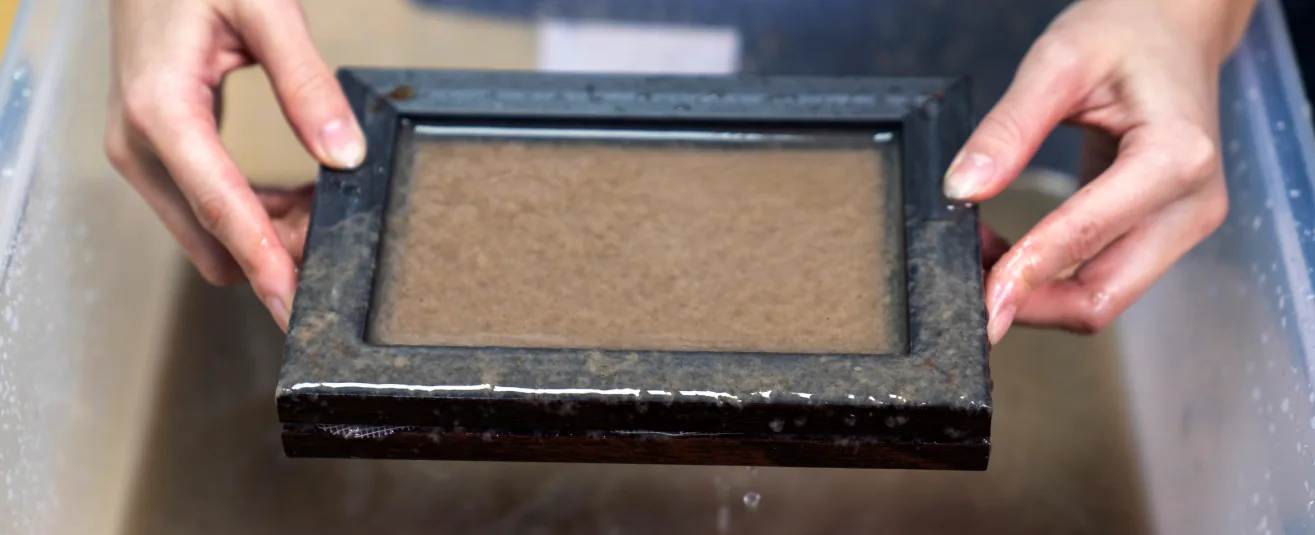
- Pulped, formed and dried into sheets by hand
Share